
Custom Vacuum Pouches in Any Size, Material, Thickness and Finish
A custom vacuum pouch is a high-barrier laminated bag engineered to be air-evacuated and heat sealed, so the film shrinks onto the product and shelf life is extended. As a vacuum pouch manufacturer in Foshan, China, Ruihong Packaging builds vacuum pouches to your size, film structure, thickness, printing, surface finish and vacuum channel, at MOQ 10,000 pcs for gravure or 3,000 pcs per order for digital printing, with 12-15 day and 7-9 day production lead times counted from artwork approval.
- Up to 11-color rotogravure on 4 printing lines
- MOQ 10,000 pcs gravure / 3,000 pcs digital per order
- Smooth, embossed, metallised, foil, retort and freezer builds
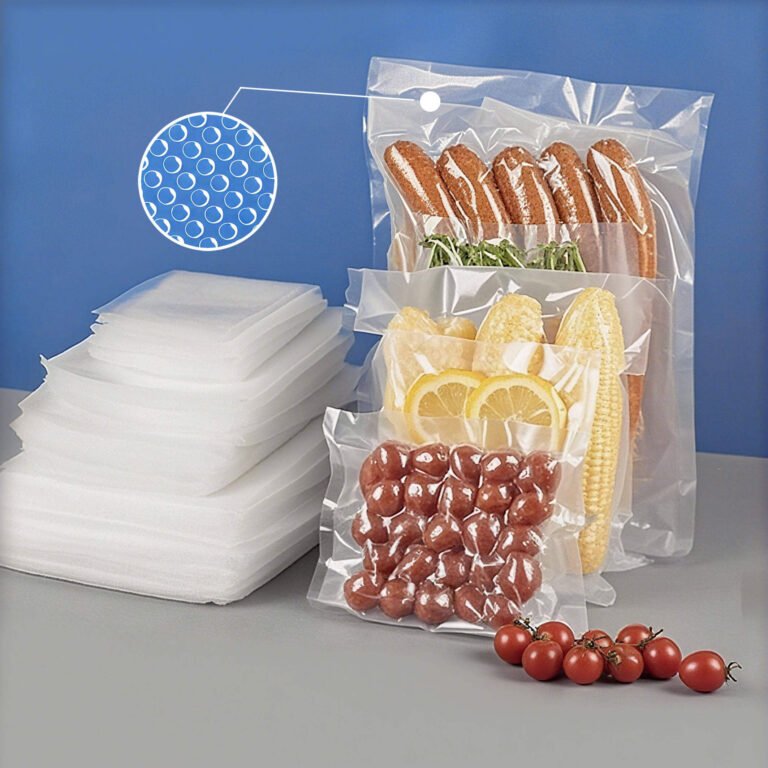
What Is a Custom Vacuum Pouch?
A vacuum pouch is a laminated pouch built to be air-evacuated and heat sealed, so the film contracts tightly against the product inside. Structure, thickness, surface texture, size and printing are all specified by the buyer, which is what separates a custom vacuum pouch from a stock vacuum bag bought by the carton.
Vacuum pouches are usually made from a nylon (PA) outer layer laminated to a polyethylene (PE) sealing layer. The nylon carries the puncture and abrasion resistance and takes the heat of the sealing bar, while the PE layer does the sealing. Add an aluminium foil or metallised layer between them and the pouch also blocks oxygen and light, which is what turns a one-week chilled shelf life into a longer one.
Buyers search for this product under several names, and they all describe the same construction: vacuum pouch, vacuum bag, vacuum sealer bag, chamber vacuum pouch, vacuum packaging pouch and retort vacuum pouch. The one that fits your line depends on your sealer — an external suction vacuum sealer needs a textured, channelled surface; a chamber vacuum machine will run a fully smooth pouch. If you are not sure which one your line takes, say so in the enquiry and we will confirm the surface against your machine.
Custom vacuum pouches are the right format whenever air, moisture, oxygen or freezer burn is the limiting factor: fresh and frozen meat, poultry, seafood, cheese, coffee, nuts, dried fruit, powders, pet food, prepared meals and non-food items that must not oxidise. Where the pack has to stand on a retail shelf instead, a stand-up pouch or doypack or a flat bottom pouch (box pouch) is the better answer, because a vacuum pouch collapses flat and cannot stand. See how vacuum pouches fit the wider custom printed flexible packaging programme.
- Legal name
- Foshan Ruihong Industry & Trade Co., Ltd.
- Brand
- Ruihong Packaging
- Location
- Foshan, Guangdong, China
- Established
- Since 2017
- Product
- Custom vacuum pouches (vacuum bags, vacuum sealer bags, chamber vacuum pouches)
- Printing
- 4 rotogravure lines (7, 8, 9, 11-color) plus digital printing
- MOQ
- 10,000 pcs (gravure) / 3,000 pcs per order (digital)
- Production lead time
- 7-9 days (digital) / 12-15 days (gravure), from artwork approval
Custom Vacuum Pouch Types We Manufacture
The twelve builds below cover almost every custom vacuum pouch enquiry we receive, across the three dimensions buyers ask about first: material structure, film thickness and surface finish. Each one starts from the same flat pouch body and differs in barrier level, gauge, surface texture, printing or the accessory fitted — so an embossed channel, a retort laminate or a printed panel is a specification change, not a change of supplier.
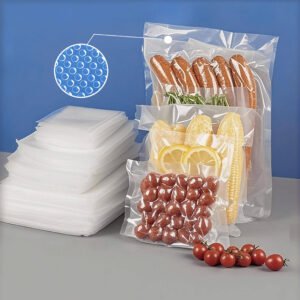
High Barrier Vacuum Pouch
A foil or metallised layer inside a PA/PE or PET/AL/PE laminate blocks oxygen, moisture and light, which is what extends shelf life on meat, cheese, coffee and dried goods. Specify the target shelf life and the barrier level follows.
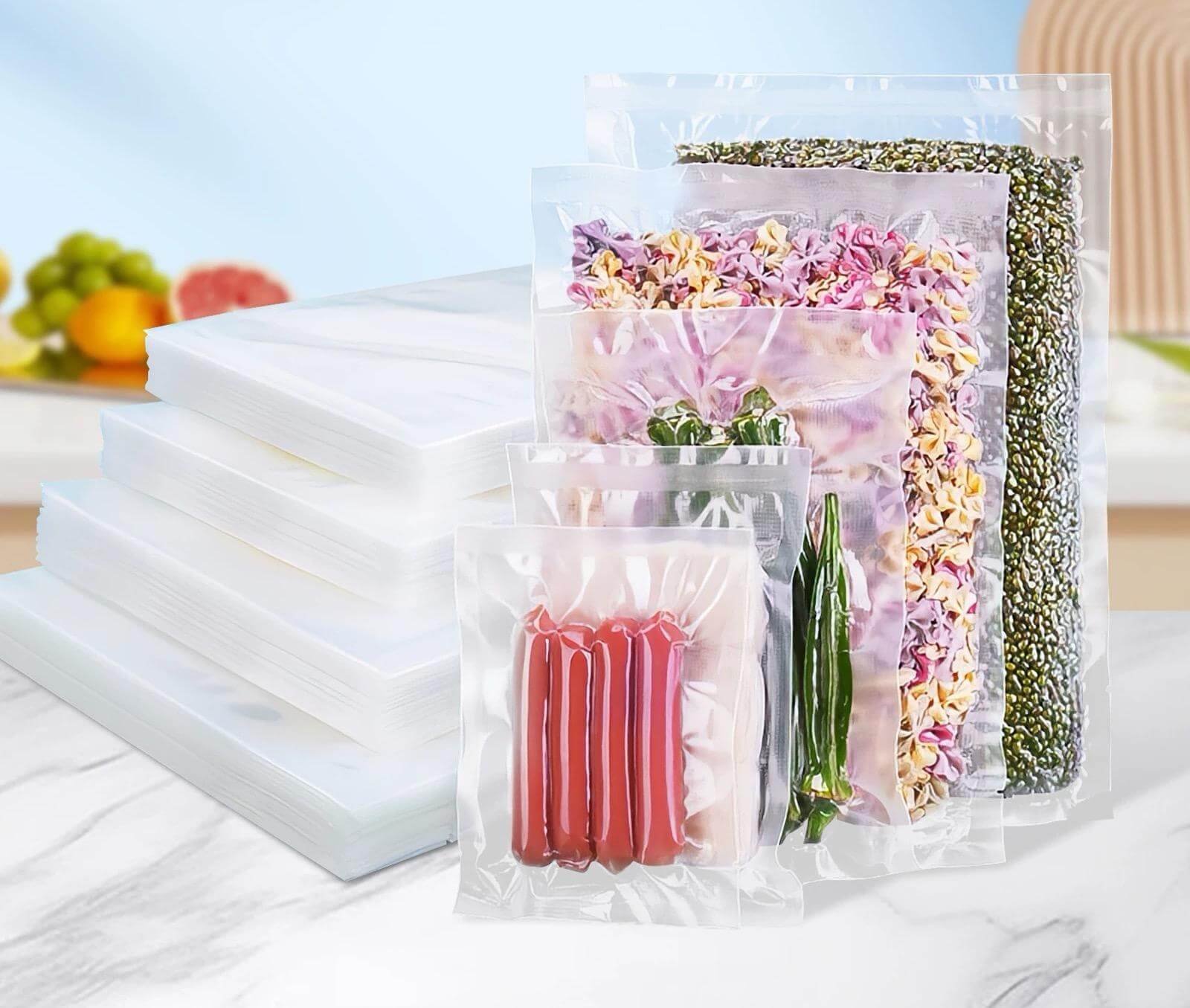
Aluminium Foil Vacuum Pouch
A PET/AL/PE laminate with a pure aluminium foil core, the highest barrier we build. Used for coffee, milk powder, spice, nut and pet food packs where oxygen and light are the shelf-life limiters. Fully printable on both faces.
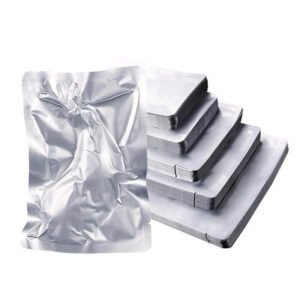
Smooth Vacuum Pouch
A fully smooth, untextured pouch with a clean transparent panel, for chamber vacuum machines and premium retail display where the buyer wants to see the cut or the product. Available printed or with a clear window only.
Flexible packaging materials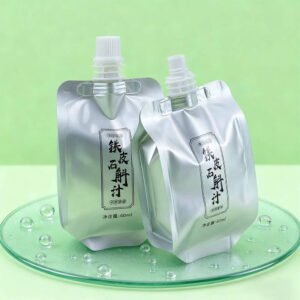
Retort and Boilable Vacuum Pouch
A PET/PA/AL/RCPP build with a cast polypropylene food-contact layer that takes hot fill, pasteurisation and retort sterilisation. The structure for sous vide, ready meals, sauces and wet pet food sealed under vacuum.
Custom retort pouches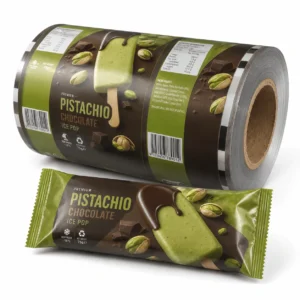
Freezer Grade Vacuum Pouch
A heavier gauge film with a low-temperature sealing layer that stays flexible and crack-free in frozen storage, and resists puncturing by frozen edges and bone-in cuts. Gauge is set by the product and the storage temperature.
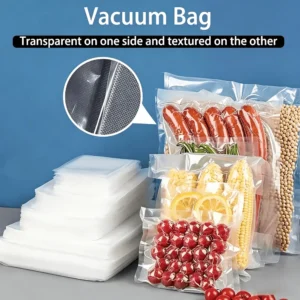
Vacuum Packed Snack Pouch
The same vacuum structure for nuts, dried fruit, seeds and granola, where a denser, airtight pack cuts carton volume and slows rancidity. Also used for compressed tea and coffee bricks, and for export brick packs.
Snack and confectionery packaging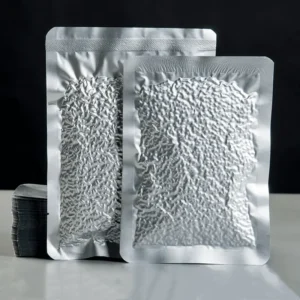
Coffee and Tea Vacuum Pouch
Vacuum packs for roasted coffee and compressed tea, where removing the air is the fastest way to hold aroma and slow staling. If the pack also has to vent carbon dioxide after filling, that is a valve pouch rather than a vacuum pouch, and it is built in a different format.
Coffee packaging solutions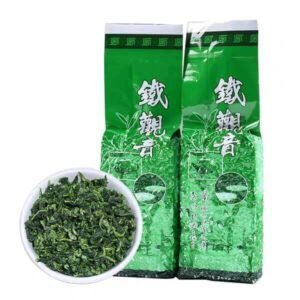
Compressed Tea Vacuum Pouch
Airtight vacuum pouches that compress loose leaf and brick tea for export, cutting freight volume and protecting the leaf from moisture and odour pickup. Produced with an aluminium foil or metallised laminate.
Tea packaging solutions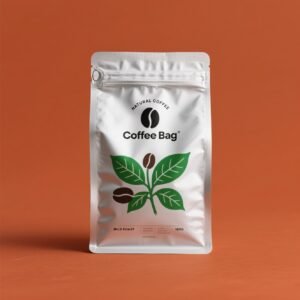
Powder Vacuum Pouch
High-barrier vacuum pouches for milk powder, protein, cocoa and nutritional powders, where oxygen and moisture cause caking and off-flavour. Fine powder needs a wider seal band, so seal width is specified with the size.
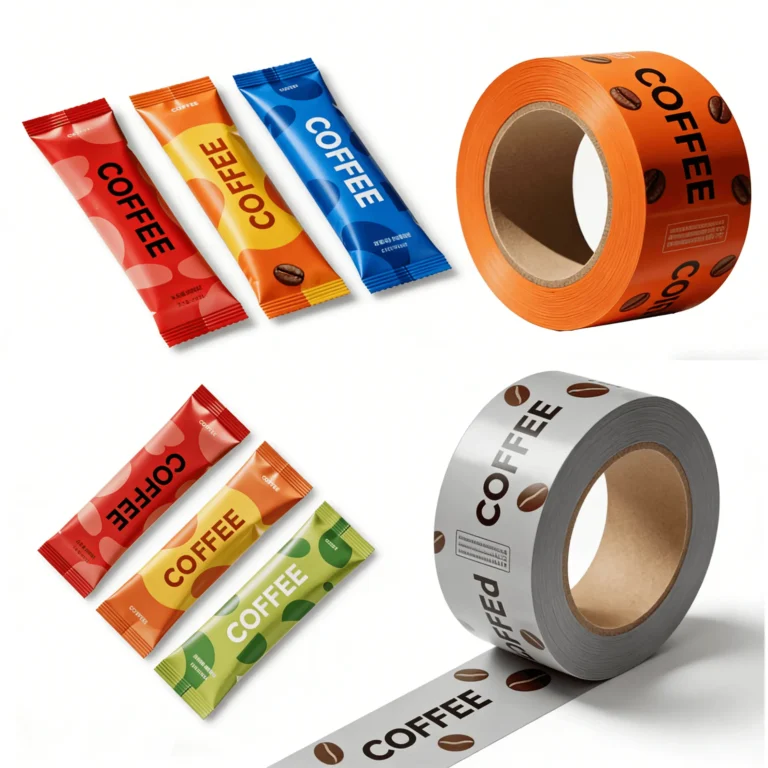
Vacuum Roll Film for FFS Lines
The identical laminate supplied as printed roll film for buyers running their own form-fill-seal vacuum line, instead of as finished pouches. Web width, core size, print repeat and winding direction are all specified.
Custom printed roll stock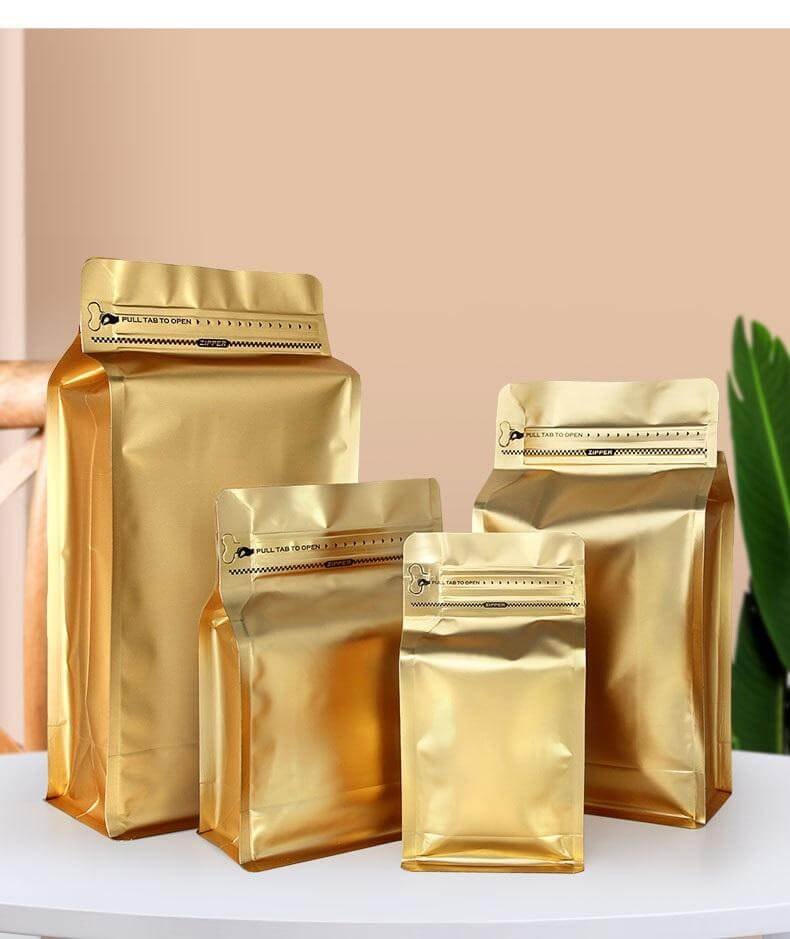
Gusseted Vacuum Pouch
A side-gusseted or bottom-gusseted vacuum pouch for whole cuts, blocks and larger portions, so a wide product still fits after evacuation. Gusset depth is set on the die-line together with the finished size.
Custom flat bottom pouch options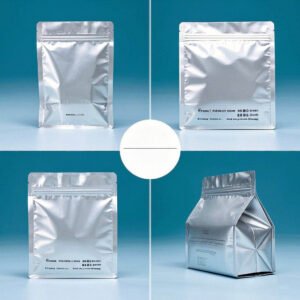
Heavy Duty Industrial Vacuum Pouch
Thicker-gauge vacuum pouches for hardware, bearings, electronic components and chemicals that must ship free of moisture and oxygen. Barrier level and gauge are matched to transport and storage rather than to food shelf life.
Pet food packaging solutionsNeed a build that is not listed here? Send the product, the portion size, the storage temperature and how the pouch is filled — the structure, gauge, surface and accessories are confirmed with the quote.
Customisation Options: Size, Material, Thickness, Printing and Finish
A custom vacuum pouch is specified in nine places: size, capacity, film structure, thickness, printing content, print method, surface finish, vacuum channel, and accessories. Ruihong Packaging runs printing, lamination, slitting and bag making in one plant in Foshan, so all nine are agreed against one die-line and quoted as a single unit price.
| What you customise | What you specify | How it is confirmed before tooling |
|---|---|---|
| Pouch size | Finished width × length in mm, plus gusset depth and seal width if your product or your sealer needs them | Matched to your vacuum machine and target product dimensions on a die-line drawing |
| Capacity | Target fill weight in g or ml per pouch | Converted into the internal volume the product needs, including the film take-up that happens after evacuation |
| Film structure | Barrier level: PA/PE, metallised, aluminium foil, or retort grade for hot fill and sterilisation | Recommended from the product, target shelf life, storage temperature and filling process, then confirmed on the sample |
| Film thickness | Total gauge of the laminate | Set by product weight, sharp edges and puncture risk — thickness follows the structure and the product, it is not chosen separately |
| Printing content | Artwork, brand colours, ingredient and regulatory text, barcode and lot-code area | Checked for colour count, bleed, seal areas, barcode placement and the seal band the die-line reserves |
| Print method | Gravure or digital printing, and the number of colours | Colour count is checked against your artwork file, and a printed proof is approved before the run |
| Surface finish | Smooth or embossed, and gloss, matte, soft-touch or spot (registered) gloss and matte | Chosen with the artwork, because finish changes how printed colours read — and with your sealer, because it decides whether a channel is needed |
| Vacuum channel | Embossed or channelled surface for external suction sealers, or fully smooth for chamber vacuum machines | Confirmed against the sealing equipment you use, because it determines the film build rather than only the look |
| Accessories | Tear notch, clear window and rounded corners — the accessories that work on a flat vacuum pouch | Confirmed before tooling — each accessory needs its own station on the bag-making machine |
Two details cause most of the back-and-forth on a first order, so it is worth settling them early. Size: quote the finished pouch width × length, not the flat film size, and state the fill weight the pouch has to hold. Filling method: tell us whether the pouches are filled and sealed on a chamber vacuum machine, an external suction vacuum sealer, or formed from roll film on your own form-fill-seal vacuum line — the same laminate can be supplied either as finished pouches or as printed roll stock film.
Can a vacuum pouch have a zipper, a handle, a hanging hole, a valve or a spout?
No — none of them. A vacuum pouch has no headspace after sealing and the body collapses flat under the vacuum, so a press-to-close zipper, a carry handle or a hang hole either cannot be fitted or has nothing to hold once the air is removed. A degassing valve and a spout are also not offered on vacuum pouches: both would interrupt the seal band or the vacuum path, and a spout cannot survive being drawn down flat against the product.
If repeatable resealing, dosing or shelf display matters to your product more than evacuation, the right answer is a different format rather than a modified vacuum pouch — a center seal bag, a 3 side seal bag or a 4 side seal bag each take a zipper, a hanging hole or a tear notch without compromise, and a custom spout pouch in a stand-up, flat bottom, 3 side seal or 4 side seal build is what carries a spout and cap.
Film Structures and Barrier Levels
The film structure decides shelf life, seal strength and how the pouch behaves under vacuum. For vacuum pouches we most often produce five builds: PA/PE for standard chilled protection with good clarity, PET/VMPET/PE where light protection is needed at a lower cost, PET/AL/PE for the highest barrier, PET/PA/AL/RCPP for hot fill, pasteurisation and retort, and kraft paper laminates for a natural shelf look.
| Structure | Barrier level | Best suited to | Typical use in a vacuum pouch |
|---|---|---|---|
| PA/PE | Standard, with high puncture resistance | Chilled and frozen products with a shorter shelf life | Fresh meat, poultry, seafood, cheese and sous vide portions |
| PET/VMPET/PE | Medium to high | Dry goods that need light protection at a lower laminate cost | Nuts, dried fruit, coffee, tea and powder packs |
| PET/AL/PE | High | Products sensitive to oxygen, moisture and light | Coffee, milk powder, spices, nutritional powders and pet food |
| PET/PA/AL/RCPP | High, heat resistant | Hot fill, pasteurisation and retort sterilisation | Sous vide, ready meals, sauces, pastes and wet pet food |
| Kraft paper laminates | Medium | Natural and premium positioning | Organic coffee, tea and dry food packs with a paper outer surface |
These are the structures we produce most often, not a fixed catalogue — the final build is confirmed per product, shelf life and filling process. Because lamination runs in house on 3 solvent-free lines and 2 dry lamination machines, barrier level can be adjusted to your shelf-life target instead of being picked from a fixed list. See the full material and film options or the dedicated high barrier film range.
Thickness and Gauge Options for Vacuum Pouches
Thickness is stated as the total gauge of the laminate, in microns or mil, and it is chosen by product weight, sharp edges and storage temperature rather than by preference. A heavier gauge adds puncture and abrasion resistance and a stronger seal; a lighter gauge cuts film cost and pack weight. Final gauge is confirmed on the sample.
| Build | Total gauge | Why it is chosen | Typical products |
|---|---|---|---|
| Light duty PA/PE | 60-100 micron | Lower film cost and a lighter pack where the product has no sharp edges | Portioned fish fillets, sliced cheese, small dry packs |
| Standard PA/PE | 80-120 micron | The everyday vacuum build: a balance of clarity, seal strength and puncture resistance | Fresh meat, poultry, cheese, cooked meats, nuts |
| High barrier foil | 100-140 micron | Adds an aluminium foil or metallised layer for oxygen and light protection | Coffee, milk powder, spices, powders, pet food |
| Heavy duty and freezer | 130-200 micron | Extra puncture and abrasion resistance for sharp edges and frozen storage | Bone-in cuts, frozen seafood, frozen vegetables, hardware |
| Retort grade | 100-140 micron | Heat-resistant layers that survive hot fill, pasteurisation and retort | Sous vide, ready meals, sauces, wet pet food |
These are the gauge bands we work in most often; the final figure is set per product and confirmed on the sample, because a heavier gauge also changes how the pouch behaves on your sealing machine. Tell us the product weight, whether there are bones, shells or sharp edges, and the storage temperature.
Gravure or Digital Printing: Choosing Your Print Method
Two print methods cover custom vacuum pouches: rotogravure for repeat orders and colour-critical brand work, and digital printing for short runs and multi-SKU projects. Ruihong Packaging runs four rotogravure lines — 7, 8, 9 and 11-color presses — plus digital printing, so the same artwork is produced either way without changing supplier.
| Aspect | Rotogravure printing | Digital printing |
|---|---|---|
| Best run size | Repeat orders and high volumes | Trials, launches and several SKUs at once |
| Minimum order | 10,000 pcs | 3,000 pcs per order — multiple SKUs can be combined to reach it |
| Colours | Up to 11 colours across 4 lines (7, 8, 9 and 11-color presses) | Full-colour digital print with no plate cost |
| How unit cost behaves | Plate cost is charged once per design, and unit price falls as quantity rises | No plates, so short runs stay affordable — but unit price rises noticeably when a single SKU is very small |
| Production lead time | 12-15 days from artwork approval | 7-9 days from artwork approval |
| Typical project | Retail vacuum packs, meat and seafood ranges, coffee and pet food lines | Multi-flavour launches, samples and market tests |
More on colour separation, proofing and press capability on our printing technology page.
Surface Finishes and Custom Features
On a vacuum pouch, surface finish does two jobs at once: it decides how the printed brand reads on shelf, and on embossed builds it creates the air channels that let a vacuum be pulled at all. Finish is therefore chosen together with the artwork and with the sealing equipment you use.
| Surface finish | How it works and reads | Typical use |
|---|---|---|
| Embossed (channelled) | A textured surface with fine channels that let air escape towards the suction nozzle | External suction vacuum sealers, and thicker builds for bone-in meat and frozen seafood |
| Smooth | A flat, high-clarity surface with no texture and the cleanest printed result | Chamber vacuum machines, and retail packs where the cut has to be visible |
| Gloss | Brightest colours and the highest contrast | Snack, confectionery and dry food vacuum packs |
| Matte | Soft, low-reflection surface with a premium feel | Coffee, tea and specialty food vacuum packs |
| Soft-touch | A velvet feel in the hand, used for premium positioning | High-end food, gift and cosmetic vacuum packs |
| Spot gloss or spot matte | Two finishes registered on one pouch so the logo lifts off the background | Brand artwork where one element has to stand out |
Accessories are fitted during bag making, so every one of them has to be on the die-line before tooling starts.
| Feature | What it adds | When buyers ask for it |
|---|---|---|
| Vacuum channel | A channelled or embossed surface that allows air to be drawn out | Any buyer sealing on an external suction vacuum sealer rather than a chamber machine |
| Tear notch or laser score | A controlled opening point that needs no scissors | Consumer portions and food-service packs opened at the point of use |
| Clear window | An unprinted area so the product shows through | Cheese, cured meat, nuts and dried fruit where colour sells |
| Rounded corners | A die-cut radius instead of square corners | Consumer handling and packs that must not snag in transit |
| One-way degassing valve | Not available on vacuum pouches | Valve packs are built as non-vacuum pouches — ask for a valve pouch instead |
| Spout and cap | Not available on vacuum pouches | Spouted packs are built as stand-up, flat bottom, 3 side seal or 4 side seal pouches |
| Hang hole | Not available on a flat vacuum pouch | Only on non-vacuum packs, because a flat vacuum pouch cannot hold a hook |
| Roll film instead of pouches | The same laminate supplied as printed roll stock | Buyers filling on their own form-fill-seal vacuum line |
Valves, spouts, zippers and hanging holes all sit outside the vacuum pouch format, so we build them into the pouch style that supports them instead of compromising the seal. Features change the bag-making setup and the unit price, so tell us which ones you need with the enquiry rather than after the sample. Spouted constructions are covered in detail on our custom spout pouches page, and heat-resistant vacuum constructions on our custom retort pouches page.
Applications for Custom Vacuum Pouches
Custom vacuum pouches are used wherever removing the air is what protects the product: chilled and frozen food, cheese and cured meats, coffee and tea, powders, pet food, prepared meals and non-food items that must not oxidise. Ruihong Packaging matches the structure to the storage temperature and shelf-life target rather than selling from a fixed catalogue.
| Industry | Typical products | What the vacuum pouch has to solve |
|---|---|---|
| Food & Beverage | Coffee, tea, milk powder, cocoa, drink mixes | Aroma and moisture protection, plus a barrier layer against oxygen and light |
| Snacks & Confectionery | Nuts, dried fruit, seeds, granola, compressed tea bricks | Slower rancidity, a denser export pack and a lower carton volume |
| Condiments & Sauces | Pastes, sauces, hot pot base, curry portions | Leak-proof seals and heat resistance for hot fill and pasteurisation |
| Specialty Nutrition | Protein powder, nutritional paste, baby food, cheese products | Accurate portioning with oxygen and moisture protection |
| Personal & Home Care | Barrier sachets for oxygen-sensitive pastes and samples | Chemical compatibility and a premium surface finish |
| Pet Food | Wet food, nutritional paste, frozen raw portions, treat packs | Strong seals for export handling and heat resistance where retorted |
| Agriculture & Horticulture | Seed, fertiliser and nutrient portions | Moisture protection and resistance to aggressive contents |
| Industrial Products | Hardware, bearings, electronic components, lubricants | Puncture resistance and an oxygen-free pack before export |
Industry-specific specifications: see our snack and confectionery packaging, beverage and sauce packaging, coffee packaging solutions and pet food packaging solutions, or compare all packaging solutions by industry.
Manufacturing Capability Behind Your Order
Printing, lamination, slitting and bag making all run in one plant in Foshan, which is what makes a fully custom vacuum pouch practical: the film structure, the print and the vacuum channel are set by the same team that runs the machines.
| Equipment | Quantity | What it does for your order |
|---|---|---|
| Rotogravure printing lines | 4 lines (7, 8, 9, 11-color) | Up to 11-color printing for colour-critical artwork and repeat orders |
| Digital printing | Digital press | Short runs and combined SKUs without plate cost |
| Bag-making and auxiliary machines | 55 | Flat and gusseted vacuum pouch forming, plus three side seal, four side seal, stand-up and flat bottom (box pouch) formats |
| Solvent-free lamination machines | 3 | Barrier builds with no solvent residue in the laminate |
| Dry lamination machines | 2 | Structures that require adhesive lamination, including foil and retort builds |
| Slitting machines | 4 | Roll preparation and consistent web width before bag making |
| Quality inspection machines | 6 | Inspection of printed film and finished pouches before packing |
Every batch is checked on these points before it is packed:
- Seal strength — seals are tested so the pouch holds through evacuation, cartoning and transit.
- Leak check — critical on vacuum and retort pouches, where a seal failure empties the pack and ends the order.
- Print and colour — checked against the proof you approved, including registration on spot finishes.
- Dimensions — pouch width, length, gusset and seal width are measured against the die-line.
- Vacuum performance — the channelled surface or smooth build is verified against the sealing equipment it was ordered for.
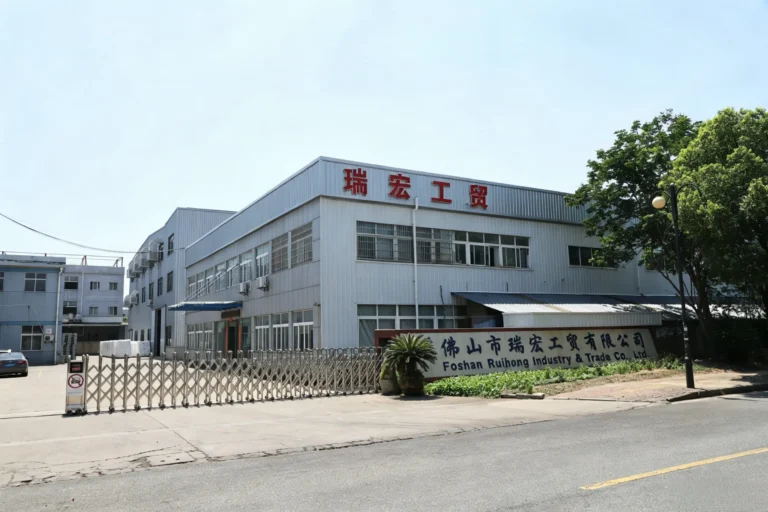
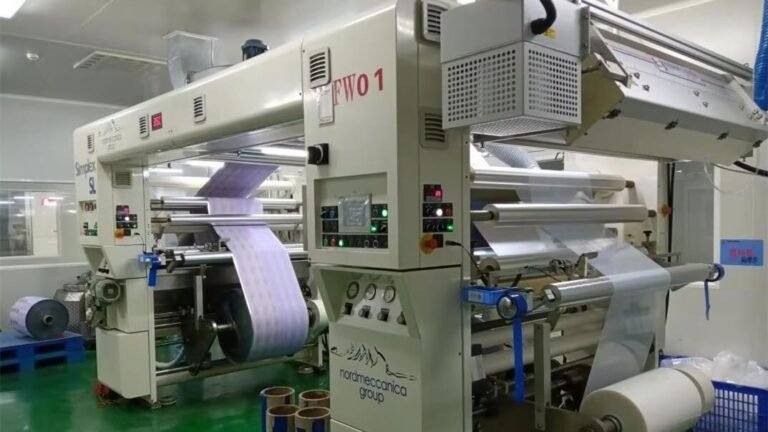
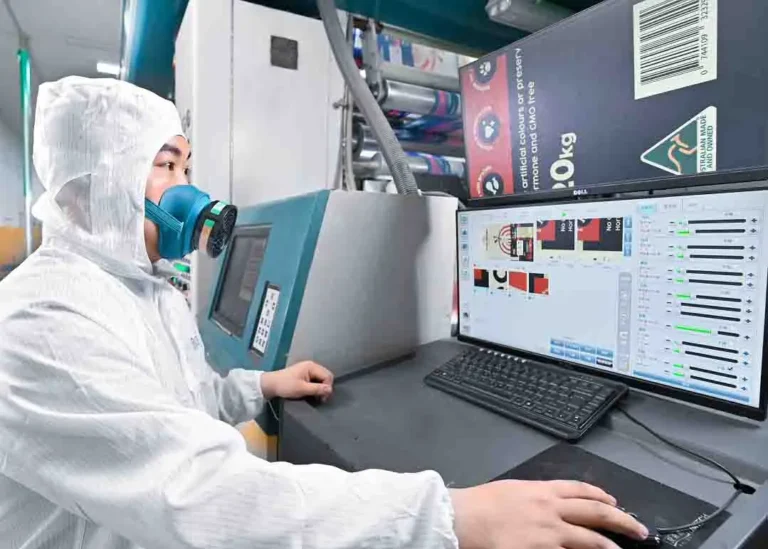
Quality procedures and inspection points are described in full on our quality control system page.
MOQ, Pricing and the One-Roll Rule
Pricing for custom vacuum pouches is driven by two things: how the artwork is printed, and how much laminate the order consumes. Ruihong Packaging quotes 10,000 pcs minimum for gravure printing and 3,000 pcs per order for digital, and unit price drops noticeably once an order consumes one full roll of film.
The one-roll rule: how buyers calculate the best price point
One roll of film holds 6,000 metres. The quantity that consumes one full roll is 6,000 ÷ pouch width (in metres). The buyer example we quote from most often: for a 160 (W) × 240 (H) + 85 mm pouch, one roll equals 6,000 ÷ 0.16 = 37,500 pcs.
The same arithmetic works on a flat vacuum pouch, because these are made from two flat panels and the width is the film width. A 100 mm wide vacuum pouch consumes one roll at 6,000 ÷ 0.10 = 60,000 pcs. A wider 250 mm cut reaches one roll at 6,000 ÷ 0.25 = 24,000 pcs, so the wider the pouch, the lower the quantity at which the best price starts.
Digital printing has no real minimum quantity. The 3,000 pcs floor exists to cover international shipping, multiple SKUs can be combined to reach it, and unit price rises noticeably when any single SKU is very small. If you are launching several portion sizes or flavours at once, digital printing with combined SKUs is usually the cheaper route.
Order quantity, film structure, gauge, surface finish and print method are quoted together — send the details below and we will price both print routes so you can see where they cross over.
How to Order Custom Vacuum Pouches
Six steps from enquiry to delivery. Two of them decide the schedule: size, gauge and surface confirmation, which has to be final before tooling because it changes the bag-making setup, and artwork approval, which starts the production clock.
-
STEP 01
Requirement review
Send the product, pouch size in mm, target fill weight, storage temperature, print colours, surface finish, accessories and order quantity. We confirm the film structure, gauge and vacuum channel, then quote EXW, FOB or CIF.
-
STEP 02
Quotation and die-line
You receive the unit price with the film structure, print method, MOQ and production lead time stated, plus a die-line showing finished dimensions, seal areas and accessory positions for your artwork.
-
STEP 03
Artwork and specification confirmed
Artwork is checked for colour count, bleed, seal areas, barcode placement and finish. Production lead time starts when the artwork and the order are both confirmed.
-
STEP 04
Printing
Gravure printing on the 7, 8, 9 or 11-color line, or digital printing for short runs and combined SKUs, with colour checked against the approved proof.
-
STEP 05
Lamination and curing
Films are laminated on 3 solvent-free lines or 2 dry lamination machines, then cured for the full period the adhesive requires before bag making begins.
-
STEP 06
Bag making, inspection and packing
Pouches are formed, the vacuum channel and any accessory are set, then the batch is checked for seal strength, leaks, print, colour and dimensions before export cartons and pallets are packed.
Related pages: custom packaging process and sample policy.
Custom Vacuum Pouches: Buyer Questions
The questions buyers ask most often before a first vacuum pouch order, answered with the numbers we quote from: material, thickness, surface, sealing equipment, MOQ and production lead time.
A vacuum pouch is a laminated pouch that is air-evacuated and heat sealed, used for fresh and frozen meat, poultry, seafood, cheese, coffee, nuts, dried fruit, powders, pet food, prepared meals and non-food items that must not oxidise. It is chosen when oxygen, moisture or freezer burn is what limits shelf life, rather than cost per pouch.
Eight things: pouch size and gusset, fill capacity, film structure and barrier level, total thickness, printed content, print method and colour count, surface finish, and the vacuum channel or embossed surface. Accessories are limited to what works on a flat vacuum pouch: a tear notch, a clear window and rounded corners. Zippers, hanging holes, degassing valves and spouts are built into other pouch styles instead.
PA/PE is the standard build for chilled and frozen products, because the nylon layer gives puncture resistance and the PE layer seals. PET/VMPET/PE adds light protection at a lower cost, PET/AL/PE gives the highest barrier for coffee, powder and pet food, and PET/PA/AL/RCPP is the retort structure for hot fill and sterilisation. Structure follows the shelf-life target.
Thickness is stated as the total laminate gauge. We work in 80-120 micron for standard PA/PE vacuum pouches, 100-140 micron for high-barrier foil builds, 130-200 micron for heavy-duty and freezer builds with sharp edges or bone, and 100-140 micron for retort grade. The final figure is set by product weight and puncture risk, and confirmed on the sample.
An embossed pouch has a fine textured surface with channels that let air travel out towards the suction nozzle, so it works on an external suction vacuum sealer. A smooth pouch has no channels and needs a chamber vacuum machine, but gives a cleaner, higher-clarity printed result for retail display. Tell us which sealer you use and we confirm the surface with the quote.
Yes, both faces. Rotogravure printing runs up to 11 colours across four in-house lines (7, 8, 9 and 11-color presses) at MOQ 10,000 pcs, and digital printing covers short runs and combined SKUs at 3,000 pcs per order. Artwork is checked for colour count, bleed, seal areas and barcode placement, and a printed proof is approved before the run.
Yes, but each needs a different build. Freezer pouches use a low-temperature sealing layer and a heavier 130-200 micron gauge so the film stays flexible and resists puncturing. Boilable and retort pouches use PET/PA/AL/RCPP with a heat-resistant cast polypropylene layer at 100-140 micron. Tell us the storage or process temperature and the structure is matched to it.
MOQ is 10,000 pcs for gravure printing and 3,000 pcs per order for digital printing, where several SKUs can be combined to reach the floor. Production lead time is 7-9 days for digital and 12-15 days for gravure, counted from artwork approval and order confirmation, not from the first enquiry. Shipping transit time is additional.
Order one full roll of film. A roll holds 6,000 metres, so the quantity that consumes one roll is 6,000 divided by the pouch width in metres. A 100 mm wide vacuum pouch therefore reaches the best gravure price at 60,000 pcs, and a 250 mm wide pouch at 24,000 pcs. Send the finished size and fill weight and we will calculate it for your pouch.
Get a Custom Vacuum Pouch Quote in 24 Hours
Send these details and we reply with unit price, film structure, gauge, surface and production lead time.
- Pouch size in mm (finished width × length, plus gusset if any) and target fill weight
- Product type: fresh, frozen, hot filled, retort, powder or non-food
- Storage and process temperature, if the pouch is frozen, boiled or retort sterilised
- Film structure or barrier requirement, if already decided
- Sealing equipment: chamber vacuum machine, external suction sealer or your own FFS line
- Surface finish and accessories: embossed or smooth, gloss or matte, tear notch, clear window or rounded corners
- Printing: gravure or digital, number of colours, and your artwork file
- Order quantity, how many SKUs, and delivery city for an EXW, FOB or CIF quote
Flexible packaging manufacturer in Foshan, Guangdong, China — since 2017
Jason · Jason@ruihongpackaging.com · +86 189 2597 5915
Ready to Start Your Custom Vacuum Pouch Project?
Send your pouch size, fill weight, storage temperature, artwork and surface requirement — we will confirm the film structure, gauge, print method and price within 24 hours.
Last updated: 2026-10-07